Posted on Mon, Feb 01, 2010 @ 02:56 PM

The all new Audi Q5 is one of the most competitive vehicles in the compact luxury SUV market. With the performance of a sports sedan and a luxurious interior, the new Q5 has added features that reinforce why it is one of the top-rated vehicles in its class.
The 2010 Audi Q5 continues to stand out for its stellar, sedan-like performance. The Q5 is equipped with an active steering option, from which inputs are immediately translated into movement. The U.S. version of the Q5 comes with a 3.2-liter V-6 engine, rated at 270 horsepower and 243 pound-feet of torque and mated to a six-speed automatic transmission.
Despite being a sedan-based crossover, the 2010 Q5 is still able to perform off-road giving a rugged quality to this compact SUV. Its climbing capability of 31 degrees incline is respectable, with a short front overhang. Ground clearance is 7.87 inches, with a fording depth of up to 19.69 inches when driving through water.
The Audi Q5 comes standard with leather seating for five. However what really sets it apart is its versatility, which is aided by the sliding rear seat. Aside from comfort, the federal government gives the 2010 Audi Q5 top scores - five stars - for all seating positions in both frontal and side crash tests. The Q5 also gets a four-star rollover score, which means it has only a 15 percent chance of rollover in a single vehicle crash.
Standout features on the all-new Q5 include Audi's Multi Media Interface (MMI) dashboard screen and control knob, an optional heated/cooled cup holder, a panoramic sun roof (the largest in its class) with tilting capabilities, sun blinds for the rear side windows and an optional power tailgate. Additional technical extras include:
- The advanced key for keyless access to the vehicle
- Audi side assist, which warns of hazards when changing lanes
- Adaptive cruise control, which maintains a constant distance between the Q5 and a vehicle in front
- Audi lane assist, the lane departure warning system
- Audi parking system with an advanced rearview camera
With advanced technology, high safety ratings, luxury features and exceptional performance, the new 2010 Audi Q5 deliveries everything a car owner would want and more.
Take a closer look at the Audi Q5 using our virtual showroom, where you can build a free quote with custom options and specifications!
Posted on Mon, Jan 25, 2010 @ 12:28 PM

Being "green" or "environmentally friendly" creates a lot of hype around Hybrid Vehicles (HEVs). In fact, all major car manufacturers are adjusting to the craze and are offering sedan hybrid models, as well as SUV and truck hybrids. Designed to increase fuel economy, increase power and cut down on emissions, the Hybrid is currently a popular vehicle for those looking to save money and remain environmentally conscious. So how does a Hybrid operate to conserve energy and ultimately save you money?
The answer is innovative technology that helps store maximum energy within the vehicle. This is done through the Hybrid's engine design and make-up. HEVs combine the best of the gas engine and the electric motor, making them far more practical than their Electric Vehicle counterparts that rely solely on a charged battery. By using an electric motor and a gas engine in tandem, the electric motor generates energy which means the gas engine doesn't have to work as hard or use as much gas. That allows manufacturers to use smaller gas engines, thus creating HEVs that are more fuel efficient, more powerful (than Electric Vehicles), and less polluting.
Gasoline-electric hybrid cars contain the following parts that all contribute to energy conservation within the vehicle:
- Gasoline engine - The hybrid car has a gasoline engine much like the one you will find on most cars. However, the engine on a hybrid is smaller and uses advanced technologies to reduce emissions and increase efficiency.
- Fuel tank - The fuel tank in a hybrid is the energy storage device for the gasoline engine. Gasoline has a much higher energy density than batteries do.
- Electric motor - Advanced electronics allow the engine to act as a motor as well as a generator. For example, when it needs to, it can draw energy from the batteries to accelerate the car. But acting as a generator, it can slow the car down and return energy to the batteries.
- Generator - The generator is similar to an electric motor, but it acts only to produce electrical power. It is used mostly on series hybrids.
- Batteries - The batteries in a hybrid car are the energy storage device for the electric motor. Unlike the gasoline in the fuel tank, which can only power the gasoline engine, the electric motor on a hybrid car can put energy into the batteries as well as draw energy from them.
- Transmission - The transmission on a hybrid car performs the same basic function as the transmission on a conventional car.
Another way Hybrids store energy it through a technology known as the "Regenerative Braking System." This works when you hit the brakes; the electric motor applies resistance to slow you down, which is transformed into kinetic energy. While you're slowing down, this energy from the movement of the wheels turns the motor which then takes on the function of a generator, converting the energy normally not used during braking into electricity. Then, the electricity is stored in the battery until the electric motor needs it. This means less work for the gas engine, less gas to be used and more money in your pocket!
The Hybrid hype is one that is both economical and ecological, becoming a larger segment in the current vehicle market. With energy and gas conservation being two concepts that Hybrids thrive off of, the horizon of modern drivability is broadened. Available in many makes and models, Hybrids are sure to revolutionize the vehicle industry in the near future.
At International AutoSource, we are proud to offer a variety of these innovative vehicles including the 2010 Ford Fusion Hybrid and the 2010 Ford Escape Hybrid.
Posted on Mon, Dec 14, 2009 @ 03:45 PM

Volkswagen updates the new 2010 Tiguan, making it a popular crossover entry in the small SUV segment. With German driving dynamics and an expensive feel, this SUV is established as a front-runner in the ever growing crossover marketplace. With improvements to design, performance and standard features the Tiguan is said to be more "sporty and upscale" compared to other vehicles within the class.
Design
With bold chrome and a swoopy headlamp treatment, the Tiguan comes in three trims- the S, SE and SEL. Boasting a coupe- like silhouette, this VW has clean, graceful and modern effect. Leather upholstery is standard on the SEL and is optional on the SE versions. The rear seats move forward and lift up to six inches, allowing drivers to optimize the Tiguan for either rear cargo room or rear passenger comfort. The rear seats fold fully down giving the vehicle a nice cargo area, making it far more practical than a sedan. Adding to the sense of space, the '10 Tiguan also has a large panoramic sunroof that is a 13 square foot opening (about three times the size of an average sunroof), and includes a power retractable shade to let the air in but keep the sun out.
Performance
The Tiguan offers a pleasant and sporty driving experience, more so than most compact crossover SUVs. Front- wheel drive is standard in all Tiguan trims; however the SE and SEL are available with an all-wheel drive option. This 4-door wagon seats five and is powered by a turbocharged 200-hp 2.0-liter 4-cylinder engine. The Tiguan's award winning engine drives with ample power; the direct injection helps it churn out a lot of useable force for its size allowing the vehicle to accelerate from 0 to 60 in 7.8 seconds. With such power, the Tiguan has a 2,200 lbs towing capacity. It comes available with either a six-speed manual or automatic transmission. Along with top performance ratings, the new Tiguan is more economical with the high-performance turbocharged engine drastically reducing fuel consumption and emissions.
Features
The 2010 Tiguan is one of the safest vehicles in its class, earning a 5-star crash test rating from the government's New Car Assessment Program (NCAP). Available safety features include ABS, traction control, antiskid system, front side airbags, rear side airbags, and curtain side airbags. Other available features include a navigation system with rearview camera, sunroof, and a 30-gigabyte hard drive to store data and digital audio files. With both safety and comfortable, the Tiguan will always ensure a pleasant ride.
Take a closer look at the 2010 Volkswagen Tiguan using our virtual showroom, where you can research colors, options and more.
Posted on Fri, Dec 11, 2009 @ 12:27 PM

As the seasons change to both summer and winter, it is important to take the proper steps in protecting your vehicle from the climate change. A lot of these maintenance essentials can be performed easily on your own, but sometimes it is difficult to determine what preparations need to be done to your car and for what season. Here are a few ideas to help you regulate your car according to the seasons:
Winterizing
During the winter, defrosting your windows may be a daily task. So, it is important to make sure your heater and defroster are in good working condition, as well as the levels of antifreeze in your cooling system.
Aim for having a 50-50 mix of antifreeze (coolant) and water inside your radiator. This will prevent the mixture from freezing even at ridiculously cold temperatures. It's easy to check the status of the mixture with an inexpensive antifreeze tester, which you can pick up at any auto parts store. If the mixture is off, your cooling system should be drained and refilled or flushed.
Keep your car stocked with some winter essentials just in case an emergency should arise when you are on the road. Gloves, boots, a blanket, flares, a flashlight and a few snacks could potentially save your life if you were to be caught in a winter weather emergency.
Summerizing
In the summertime your car engine's coolant can reach 250 degrees F, meaning your car could overheat. While you have the car in for its tune-up, make sure that the mechanic checks the radiator for any leaks or cracks. If needed, have the radiator flushed and new coolant added. If the coolant level is low, have them add coolant to the right level for your car.
The air conditioner should be inspected for any worn or damaged belts. You should inspect the air-conditioning hoses for any leaks or damage. You want to also make sure the clamps are tight; if they are loose you can tighten them with a screwdriver.
When the temperature goes up, so does your braking system's temperature. This can cause your brake pads to wear quickly. Have your brakes checked to see how worn they are and replace them if necessary.
For both Summer and Winter
Weather and temperature change can take a toll on your tires. Checking their traction is important, along with checking tire pressure regularly to make sure your tires don't have any dangerous wear or nicks in the rubber. Rotating tires after every 7,500 miles will help you get better gas mileage.
Posted on Thu, Nov 19, 2009 @ 12:54 PM
A Social Security Number (SSN) is the most highly used identification number in the US. Every citizen is provided with a SSN by the Social Security Administration, an agency under the United States government. Although originally used for tax purposes and tracking Social Security benefits, the SSN is now the unofficial national identification number for any US citizen.
Generally, only noncitizens that are authorized to work in the United States by the Department of Homeland Security (DHS) can get a Social Security number. Social Security numbers are used to report an individual's wages to the government and to determine a person's eligibility for Social Security benefits. You need a Social Security number to work, collect Social Security benefits and receive some other government services. There is no charge for a Social Security number and card.
A SSN is a very important piece of information as it is someone's main source of identity in the US. Always keep your number confidential and avoid giving it out unnecessarily. You should keep your Social Security card in a safe place with other important papers and not carry it with you unless you need to show it to an employer or service provider.
Here are some helpful links for more information:
http://www.ssa.gov/pubs/10002.html#how -how to get a SSN and card
http://www.ssa.gov/pubs/10096.html - for noncitizens
http://www.ssa.gov/pubs/10107.html - for foreign workers
Posted on Tue, Oct 27, 2009 @ 01:26 PM

Relocating to a new country requires a lot of time and effort to ensure a smooth transition to your new lifestyle. Being able to identify tasks, as well as a timeline for them to be accomplished, will help you tremendously in your relocation.
Here are some ideas to help you get started on your relocation:
□ Contact the embassy of the new country and obtain information on visa requirements and vaccinations. A valid passport is essential, prior to filling in an application for a visa. Also, many countries require a letter of recommendation, which can be obtained from an individual's bank manager or employer.
□ Calculate your expenses in advance. Moving abroad can be very expensive, so by determining a budget before hand you will have a better understanding of where the most money needs to be filtered. If you are relocating for work, your company may assist with the costs for your move so it is necessary to verify if they do. Do not forget to include the cost of living in your new country. Use an online currency converter to help you establish knowledge on these costs (i.e. food, shopping, transportation, etc).
□ Find a shipping service for your belongings. If relocating through your company, they may have a vendor ready to assist in this task. Again, you will need to determine if your company will pay these costs. If you are finding a shipping service on your own, take the time to figure out if this company is professional, reliable, and has experience. Also, you may want to explore an international moving insurance company. This is your only way to protect your belongings in case of damage, missing items or any other disaster that may occur.
□ Are you relocating with a pet? After determining if you can bring your pet with you, you can either move your pet by yourself or hire a pet shipping service to assist you. In any case, before deciding to travel with your pet, think if it is in the animal's best interest? Will the move cause your pet to have health issues that might affect its adaptation to the life abroad? The answer depends a lot on where you will be living.
□ Find out what the tax obligation is in your own country - Will you have to file for expatriate tax returns each year on your worldwide income? If yes, it is essential that you search for an expat tax advisor.
□ Learn as much as you can about your target country - If the language is different from your own, it is recommended you learn the language of your new home. Collecting as much information as you can about the culture of the new country, work ethics, and customary nonverbal communication, etc., will also help your transition and help reduce culture shock.
□ Packing and preparing a home inventory list. Start looking around the house, decide what items you want to pack in boxes and ship to your new country, and what items will be packed in your suitcases and carry on luggage. Whatever you do not need, you should either donate to a charity, or consider having a moving sale.
□ What stays and what goes? You might find out that some of your belongings have to stay because they can't be used in your destination country (electrical appliances, winter clothing, etc.) but you don't want to sell or donate them. Put these items in a storage unit that accommodates your needs and timeline.
Don't waste time! Getting an early start on your relocation will only help you in the long run. Keep everything organized and have all the proper information or documents you need for the move. In some cases, getting the required documents may take months so it is wise to get these tasks done sooner than later.
Posted on Wed, Oct 07, 2009 @ 12:11 PM
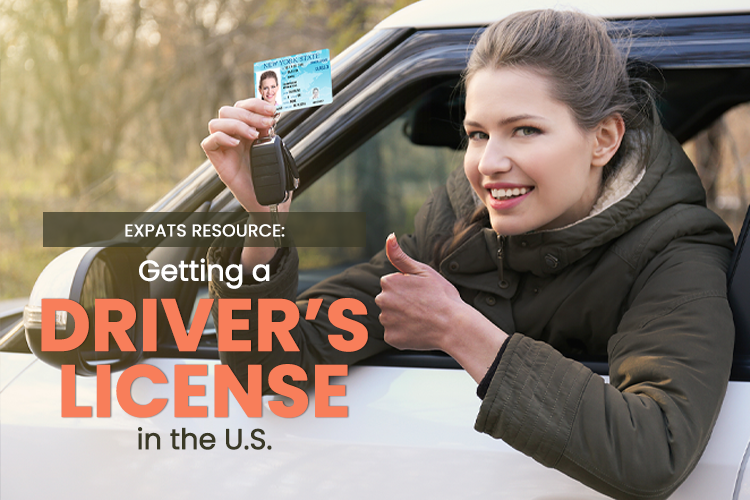
A very important document to have in the United States is a driver's license. This is used to operate a motor vehicle and as a main source of identification, being that the U.S. does not have a national identification system. To acquire a driver's license, one must follow the essential steps to have the required knowledge of the road in order drive in the country:
1. First, one must familiarize themselves with the rules and regulations for operating a motor vehicle. You can do so by visiting the Department of Motor Vehicles (DMV) that each state has or go to their website and download a driver's manual. (website provided below).
2. Once you are confident that you have learned the written rules for driving go to the nearest DMV in your state and take a written test. The test generally contains a number of multiple choice questions, either taken on paper or on a computer. Once the test is passed, you will be given a learner's permit allowing you to operate a car only if a licensed driver is sitting next to you. A permit is required to take driving lessons, which can either be done privately or through a driving school.
3. When you are comfortable driving on the roads in the U.S. you will have to take a road test at the DMV. You will most likely have to make an appointment, possibly having to wait a few weeks before the actual driving test. The car you plan on using for your road test should have proper liability insurance, as well all working- condition controls (break lights, indicator lights, horn, etc). During the test, an inspector will sit next to you and direct you where to drive while checking your driving/ parking skills. You will find out the results immediately after you finish the test whether you passed or failed. If you pass, you will get a temporary paper license and receive the original license in the mail around two weeks later.
4. You will be required to pay a fee for your license and also show proof of identity with a photograph (which includes your date of birth) as well as proof of residence in the state of which you are applying. Passports, I-94 cards, or a green card stamp are all acceptable forms of identification.
5. Lastly, you will be required to take a vision test before getting your license.
Some useful links are provided for information on getting your license in the U.S.:
http://www.usa.gov/Topics/Foreign_Visitors_Driving.shtml -general information on obtaining a license
http://www.usa.gov/Topics/Motor_Vehicles.shtml -list of all states Department of Motor Vehicles
http://www.dmv.org/ -guide to the DMV
Posted on Wed, Sep 30, 2009 @ 02:31 PM
When it comes to vehicle purchasing, it is difficult to decide whether to buy or lease a car in the U.S. Both buying and leasing has its advantages, but determining what the right resolution is for you presents some challenges. Taking into consideration your driving preferences, amount of travel and lifestyle will help establish what the right choice is and will provide insight on future vehicle purchasing decisions.
Standard law in the United States declares that any person operating a motor vehicle must have a valid in-state driver's license. Each state has different driving laws to abide by, so make sure you receive the correct information on what these rules entail. Along with having a valid driver's license, you are required to have auto insurance before you receive the title to a car. This ensures that you will receive financial coverage in case of an accident, theft or damage caused to the vehicle. You will have to pay taxes, tag fees and a down payment along with your insurance.
To buy a car means you will own the vehicle and get to keep it at the end of the term. When you first buy a car, up-front costs include the cash price or a down payment, taxes, registration and fees, and other charges.
While buying a car, a customer is expected to put down at least 20 percent of the vehicle cost towards a down payment. When a buyer puts down 20 percent at the time of purchase, he or she has effectively paid for the first year's depreciation up front. This means that the buyer is not "upside down" on his or her loan. Being upside down means owing more on the loan than the car is worth. If you plan on buying a vehicle, there are a few pros and cons you need to consider:
Pros:
- You can decide between a new or used vehicle and sell the car whenever you choose.
- The car is yours and you can use the car as security for a loan.
- You many put as many miles on the vehicle and invest as much or as little as you choose in maintenance and repair.
Cons:
- The mileage, condition and popularity of your car will determine its final value.
- If you don't make your car payments on time and in full, your lender can repossess the car and resell it.
- If the resale price of the car is lower than the amount you own on your loan, you could get stuck paying the difference.
When you lease a car, you do not own the vehicle. A leasing company usually owns the vehicle, and lets you "rent" it over a specified period. You get to use it but must return the car at the end of the lease unless you choose to buy it.
With a car lease you are paying monthly installments, which will reflect an interest rate as well as the depreciation of the value of the car you are leasing. If you plan on leasing a vehicle, there are some pros and cons to consider:
Pros:
- The vehicle will most likely be new because used- car leases are hard to find.
- When the lease ends, you can return the car, or buy it for a previously determined price (the residual value).
- Your monthly lease payments will be lower than monthly loan payments for a comparable car.
- You'll be able to lease a more expensive vehicle than you can buy because lease payments only have to cover a portion of the car's entire cost.
Cons:
- You'll probably encounter a penalty if you: break the lease early, exceed annual mileage limits, don't meet a specific maintenance schedule, or fail to make the required monthly lease payments on time.
- You won't be able to pledge it as security for a loan because you don't own the vehicle.
- You'll have to pay for any repairs needed at the end of the lease period to make the car re-sellable.
Overall, for short- term deals it is cheaper to lease a car because they have low monthly costs. Although you will always have a relatively new car if you continue to keep leasing new- model vehicles, it is always more expensive to lease a car long-term than to buy a similar car and keep it for the same length of time. No matter what you choose, you will always have to make your car payments on time. If you fail to make proper payments, your credit record will suffer and you may ultimately lose the car.
Whether leasing or purchasing, be sure to weigh the pros and cons in your decision- making process that best supports your financial situation and mobile lifestyle.